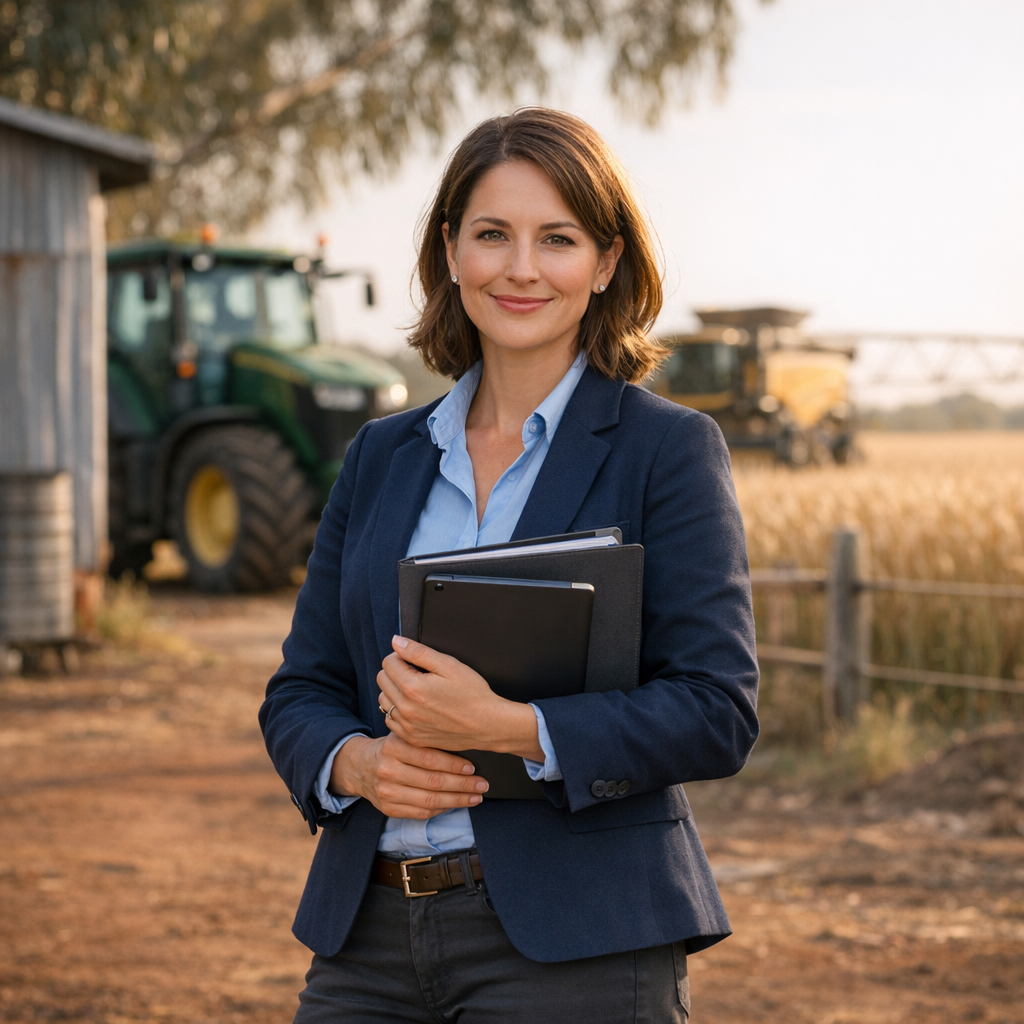
Working with a farm machinery loan broker can help Australian farmers and agribusiness owners make more informed decisions when financing essential equipment. Whether you are comparing Farm Machinery Loans for a tractor, harvester, irrigation upgrade or livestock handling system, a broker can assess your enquiry, explain available lender pathways and help you understand options suited to seasonal cash flow. This website is designed to connect you with participating finance brokers for farm equipment finance enquiries.
What is a broker
A broker is an intermediary who assists consumers and businesses by helping them navigate finance or insurance options from a range of providers. In the context of Farm Machinery Loans, a broker may help farmers compare lending structures for new or used machinery, including tractors, harvest equipment, irrigation systems and livestock equipment.
Rather than approaching one lender directly, a broker can help interpret the requirements of different finance providers and guide you through documentation, eligibility considerations and application steps. This can be particularly useful for Agricultural Machinery Loans where seasonal income, asset age, business structure and repayment timing may all influence the available options.
Why use a broker
Using a broker for Rural Machinery Loans may help to save time and provide access to a broader view of the market. A broker may understand which lenders are more familiar with agricultural income patterns, equipment values and business needs, helping you compare options with greater confidence.
Farmers often need machinery quickly to maintain productivity, particularly during planting, harvesting or livestock management periods. A broker can help you explore Farm Machinery Loans, Tractor Loans Australia options, Harvest Machinery Loans, Irrigation System Lending and Livestock Equipment Loans while considering practical details such as deposit requirements, repayment frequency and potential seasonal repayment structures.
For farms with limited financial documentation or variable income, a broker may also discuss low-doc pathways where available and appropriate. They can explain the differences between chattel mortgages, leases and other asset finance structures, including Agricultural Machinery Leasing and Farm Machinery Leasing, without providing personal financial advice.
How we approve brokers
Farm Machinery Loans applies a broker review process designed to support professionalism, consumer confidence and compliance-aware referrals. The process includes validating the legitimacy of referral partners.
Where required, brokers are expected to operate in line with applicable Australian licensing, credit and regulatory obligations. This includes appropriate conduct, responsible communication and transparent handling of consumer enquiries. Our process is intended to connect users with participating brokers for farm equipment finance enquiries.
How we assign your broker
When you submit an enquiry, the details you provide may help determine which broker you are connected with. Factors can include your selected product/category, geographic service area, broker availability and capacity, timing, and account and bidding settings.
This matching approach may assist farmers looking for Farm Machinery Loans, Agricultural Machinery Loans, Tractor Loans Australia finance, Harvest Machinery Loans, Irrigation System Lending or Livestock Equipment Loans. It is designed to connect you with a participating finance broker who accepts your enquiry type, subject to referral availability.
You may also wish to consider indicative repayments using an online calculator tool before speaking with a broker, as this can help frame your discussion around budget, seasonal income and expected equipment use.
What you can expect from your broker
A broker should communicate clearly, explain the information required and outline the general process for comparing finance options. You can expect a professional approach that focuses on understanding your circumstances, the equipment you want to acquire and the role that machinery plays in your farm operation.
Your broker may discuss lender requirements, indicative repayment structures, security arrangements, documentation and potential timeframes. They should also be transparent about fees, commissions or referral arrangements where applicable, and provide guidance that helps you make your own informed decision.
While a broker can help you compare Farm Machinery Loans and related rural lending options, approval and loan terms remain subject to lender assessment, eligibility criteria and the information supplied. You should consider whether any finance arrangement is suitable for your business objectives and seek independent advice where needed.
Farm machinery finance support for Australian agribusiness
Agricultural equipment can involve significant upfront costs, and finance needs often vary between broadacre farming, mixed farming, horticulture, dairy, livestock and contracting businesses. A referral to a participating broker can help you explore competitive options for essential machinery without needing to approach multiple lenders on your own.
Whether you are upgrading a tractor, replacing harvest machinery, investing in irrigation infrastructure or financing livestock handling equipment, broker assistance can help simplify the application process. Farm Machinery Loans focuses on connecting rural borrowers with participating finance brokers for agricultural equipment finance enquiries.
Frequently asked questions
Q: Can a broker help me compare Farm Machinery Loans in Australia? A: Yes. A broker can help you compare available lender options, finance structures and repayment arrangements for eligible farm machinery purchases.
Q: Do brokers assist with both new and used agricultural machinery? A: Many brokers can assist with finance enquiries for new and used equipment, subject to lender criteria, asset condition, age and valuation requirements.
Q: Are seasonal repayment options available for farm machinery finance? A: Some lenders may offer repayment structures that align with seasonal income cycles. Availability depends on your circumstances and lender assessment.
Q: Can I seek finance for tractors, harvesters, irrigation systems and livestock equipment? A: Yes. Brokers may assist with Tractor Loans Australia options, Harvest Machinery Loans, Irrigation System Lending and Livestock Equipment Loans.
Q: What information will a farm machinery loan broker usually need? A: A broker will generally ask about the asset, purchase price, business details, income, trading history and preferred finance or leasing structure.
Q: Is Farm Machinery Leasing different from a machinery loan? A: Yes. Leasing and loan structures can differ in ownership, repayment treatment and end-of-term options, so a broker can explain general differences.
Begin your farm machinery finance enquiry
Farm Machinery Loans utilises a broker connection platform for Australian farmers and agribusiness owners seeking practical support with rural equipment finance. If you are ready to explore options, you can begin your enquiry to seek a referral to a participating finance broker. Brokers interested in receiving relevant agricultural finance enquiries are encouraged to explore joining the network through the site’s Leads Tour.
How we are remunerated
We do not charge consumers a fee for submitting an enquiry through our service. Instead, participating brokers pay us for enquiries referred to them, with this cost forming part of the broker's marketing and advertising expenses. The amount payable is determined through our broker bidding system, which allows our approved broker panel to set the market price they are prepared to pay for different types of enquiries and locations. Brokers can also set budgets and adjust their bids according to factors such as the day of the week, time of day and the number of enquiries they have recently received.
Our bidding system is designed to do more than simply identify the highest bidder. Dynamic bids and budget controls help brokers manage the number and timing of enquiries they receive according to their capacity, while our allocation process takes these settings and other relevant matching criteria into account when determining which eligible broker receives an enquiry. This helps us operate an efficient referral marketplace in which lead prices are set by participating brokers, while directing enquiries to an appropriately licensed and vetted broker from our panel who is available, has capacity and is better positioned to respond in a timely manner. The amount a broker is prepared to pay for an enquiry does not affect the insurance premiums, products or options they may subsequently discuss with you.
Recent rural coverage of the national sheep and goat electronic identification rollout is a timely reminder that compliance changes can quickly become machinery decisions. For many producers, eID is not only about tags. It can also involve scanners, panel readers, weigh systems, drafting equipment, race upgrades, software subscriptions and better connectivity around yards and loading areas. - read more
Recent rural market coverage is pointing to a more constructive winter crop outlook across several Australian growing regions, with attention now turning from seasonal potential to harvest readiness. For grain producers, the practical issue is not only whether yields improve. It is whether the farm’s machinery, labour and logistics can handle the crop efficiently if finishing conditions remain supportive. - read more
Recent rural field day coverage from AgQuip in Gunnedah has again shown how closely Australian farmers are watching machinery capability, price and timing. Major events give producers a chance to compare tractors, spray technology, handling equipment, tillage gear, harvest support machinery and digital add-ons in one place. This year, the practical takeaway is not simply that new machinery is available. It is that many farm businesses are becoming more deliberate about which upgrades are essential and which can wait. - read more
Recent rural industry coverage points to a lift in farmer confidence across parts of Australia, helped by improved seasonal conditions, firmer commodity signals and a more constructive outlook for production. For farm machinery buyers, the practical significance is not simply that optimism is returning. It is that machinery decisions which were delayed during tighter conditions may now be moving back onto the planning table. - read more
Crop farming in Australia often depends on reliable machinery for planting, harvesting, irrigation and production efficiency. Machinery finance may help eligible farming businesses spread the cost of equipment over time, but the right approach depends on cash flow, seasonal income patterns, loan terms and the farm's operational needs. - read more
Livestock farming is a major part of Australian agriculture, with operations ranging across cattle, sheep, poultry and other livestock enterprises. Machinery finance can help eligible farmers consider ways to fund equipment used for feeding, handling, transport, fencing, water systems and day-to-day livestock operation management. - read more
Australia is renowned for its vast plantations and thriving forestry industry. These operations require sophisticated machinery to efficiently manage and harvest resources. From tractors to harvesters, farm machinery plays an important role in supporting modern plantation and forestry operations. - read more
Aquaculture is a growing industry in Australia, supported by the country's extensive coastline and abundant water resources. It plays an important role in supplying seafood to both domestic and international markets and encompasses a diverse range of operations, including fish, crustaceans, molluscs and algae farming. - read more
Knowledgebase
Personal Loan: A Personal Loan is a means of obtaining finance from a financial institution or financial product provider and the lending criteria usually depends on criteria such as personal income and expenses, assets and liabilities, employment status and previo