
Farm Machinery Loans :: News
SHARE

Share this news item!

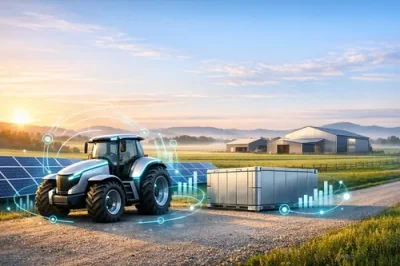
What On-Farm Electrification Means for Machinery Finance

Planning capital upgrades before diesel dependence becomes a cost risk

What On-Farm Electrification Means for Machinery Finance?w=400

The information on this website is general in nature and does not take into account your objectives, financial situation, or needs. Consider seeking personal advice from a licensed adviser before acting on any information.

A new report highlighted by Grain Central has put on-farm electrification back in the spotlight, arguing that Australian farmers should prioritise electric machinery, vehicles and supporting energy infrastructure over a broad shift to biofuels.
For producers already weighing up machinery replacement cycles, the message is not simply environmental.
It is also a capital planning issue.

The report, commissioned by Farmers for Climate Action and prepared by energy researcher Professor Ray Wills, frames electrification as a pathway to reduce long-term exposure to diesel price shocks and strengthen regional energy independence. It suggests biofuels may still have a bridging role for existing tractors, harvesters and remote operations, but sees electric systems as the more durable long-term direction as machinery technology matures.

For farm businesses, the practical takeaway is that electrification will not be a single purchase decision. It may involve staged investment in electric utes, smaller mobile plant, stationary equipment, solar generation, battery storage and eventually heavier machinery. That changes the way farmers may need to think about compare financing options, because the asset being financed could increasingly include both the machine and the energy system that keeps it running.

The transition also raises timing questions. Many large broadacre operations will not be ready to swap diesel-powered seeding and harvest fleets immediately. Availability, charging capacity, paddock logistics and downtime risk all need to be tested carefully. However, lower-risk starting points may include workshop equipment, pumps, short-range vehicles and other assets that return to a central charging point. These investments can help a business build experience before committing to heavier electric machinery.

Another point for borrowers is residual value. As electric farm equipment becomes more common, lenders and buyers will pay close attention to battery condition, service support, software access and brand backing. That means the cheapest upfront asset may not deliver the best whole-of-life result. Farmers should consider maintenance expectations, charging infrastructure, warranties and the likely trade-in pathway before signing contracts.

The report also canvasses policy change, including a proposed cap on very large Fuel Tax Credit Scheme claims and redirecting savings towards regional energy transition support. Whether or not that proposal advances, it signals that diesel-reliant business models may face more scrutiny over time.

For now, the best approach is measured, not rushed. Farmers considering electrified machinery should review cash flow, seasonal income patterns and replacement priorities, while modelling repayments under different energy-cost assumptions. Electrification may still be emerging, but finance planning for it should start well before the next major machinery upgrade.

Published:Friday, 10th Jul 2026
Author: Paige Estritori

Please Note: We do not endorse any specific products or companies. Some content is sourced from third parties, including press releases, and may not be independently verified for accuracy or completeness.

Share this news item:

Rate this article

0 Comments

No comments yet. Be the first to share your thoughts.

Finance News

What On-Farm Electrification Means for Machinery Finance
10 Jul 2026: Paige Estritori
A new report highlighted by Grain Central has put on-farm electrification back in the spotlight, arguing that Australian farmers should prioritise electric machinery, vehicles and supporting energy infrastructure over a broad shift to biofuels. For producers already weighing up machinery replacement cycles, the message is not simply environmental. It is also a capital planning issue. - read more
Right to Repair Push Could Change Farm Machinery Decisions
03 Jul 2026: Paige Estritori
Australia’s proposed expansion of right to repair rules to agricultural machinery has become a timely issue for farmers who rely on tractors, headers, seeders, sprayers and other high-value equipment to keep seasonal work on track. The Federal Government’s consultation on extending the existing repair information framework to farm machinery closes on 3 July 2026, bringing the sector closer to a potential shift in how service and repair access is managed. - read more


Farm Equipment Finance Articles

Crop Farming: Farm Machinery Finance
Farming in Australia is an essential and deeply ingrained part of the country's economy and culture. At the heart of modern agriculture is the need for reliable and efficient farm machinery. These machines are not only vital for increasing productivity but also essential for keeping up with the demands of crop farming. To acquire such machinery, many farmers look towards specialized finance options tailored for agricultural needs. - read more
Plantation and Forestry: Farm Machinery Finance
Australia is renowned for its vast plantations and thriving forestry industry. These operations require sophisticated machinery to efficiently manage and harvest resources. From tractors to harvesters, farm machinery plays an important role in supporting modern plantation and forestry operations. - read more
Aquaculture: Farm Machinery Finance
Aquaculture is a growing industry in Australia, supported by the country's extensive coastline and abundant water resources. It plays an important role in supplying seafood to both domestic and international markets and encompasses a diverse range of operations, including fish, crustaceans, molluscs and algae farming. - read more
Livestock Farming: Farm Machinery Finance
Livestock farming is a significant component of Australia's agricultural industry, contributing billions of dollars to the economy annually. With vast landscapes and diverse climates, Australia is well-suited to raising cattle, sheep, poultry, and other livestock. Farmers across the country are constantly adapting to new challenges and opportunities in the market. - read more

Knowledgebase
Hedge Fund:
An alternative investment vehicle that uses pooled funds to employ different strategies to earn active returns, or alpha, for their investors.