
Farm Machinery Loans :: News
SHARE

Share this news item!

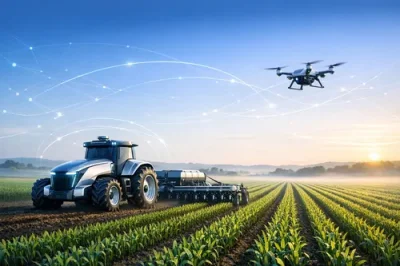
Autonomous Farm Machinery Moves From Curiosity to Capital Planning

Cost, connectivity and confidence are now central to adoption decisions

Autonomous Farm Machinery Moves From Curiosity to Capital Planning?w=400

The information on this website is general in nature and does not take into account your objectives, financial situation, or needs. Consider seeking personal advice from a licensed adviser before acting on any information.

Autonomous and semi-autonomous farm machinery is no longer a distant concept for Australian grain producers.
Recent industry research highlighted by Grain Central shows more farm businesses are experimenting with automation, from GPS-guided equipment and autosteer to drones, robots and other systems designed to reduce labour pressure and improve operational efficiency.

For farmers considering their next major machinery purchase, there are many practical considerations: automation may offer productivity gains, but the buying decision needs to be grounded in practical return on investment. The research, led by Grain Producers Australia, the Tractor and Machinery Association of Australia and the Society of Precision Agriculture Australia, points to strong interest across the sector, while also identifying affordability, set-up costs and patchy regional connectivity as major barriers.

This matters because autonomous machinery is not a simple replacement of one tractor, sprayer or seeder with another. It can involve software, connectivity, staff training, compatibility with existing implements, data management and ongoing technical support. That makes the finance conversation broader than the sticker price. Farmers may need to consider total establishment costs, expected labour savings, fuel and input efficiencies, servicing requirements and whether the technology can be scaled across multiple seasons.

For businesses already running on tight seasonal cash flow, this is where structured finance options may play an important role. Rather than viewing autonomous technology as an all-or-nothing purchase, producers may be able to stage adoption through upgrades, attachments, semi-autonomous systems or used machinery with compatible guidance features. This can help test the value of automation before committing to larger capital expenditure.

Connectivity is another finance consideration. A machine that depends on reliable digital infrastructure may not deliver full value if it is operating in an area with weak coverage. Before signing a purchase contract, growers should assess whether additional investment in connectivity, base stations or support services is needed. Those costs should be included when modelling repayments and payback periods.

The adoption pathway will vary by enterprise size, crop type, labour availability and risk appetite. For some farms, automation may help address worker shortages and improve timeliness during planting, spraying or harvest. For others, the better decision may be to wait for more field demonstrations, stronger dealer support or clearer evidence of whole-farm returns.

The broader trend, however, is difficult to ignore. As autonomous systems become more practical and manufacturers continue investing in Australian conditions, machinery finance will increasingly need to account for digital capability, not just horsepower, age and hours. 

Published:Friday, 17th Jul 2026
Author: Paige Estritori

Please Note: We do not endorse any specific products or companies. Some content is sourced from third parties, including press releases, and may not be independently verified for accuracy or completeness.

Share this news item:

Rate this article

1 Comment

H
Hailey Thompson 17 Jul 2026

I'd be nervous financing autonomy without pricing the connectivity gear first, because patchy coverage already makes basic guidance frustrating on our place.

Finance News

Autonomous Farm Machinery Moves From Curiosity to Capital Planning
17 Jul 2026: Paige Estritori
Autonomous and semi-autonomous farm machinery is no longer a distant concept for Australian grain producers. Recent industry research highlighted by Grain Central shows more farm businesses are experimenting with automation, from GPS-guided equipment and autosteer to drones, robots and other systems designed to reduce labour pressure and improve operational efficiency. - read more
What On-Farm Electrification Means for Machinery Finance
10 Jul 2026: Paige Estritori
A new report highlighted by Grain Central has put on-farm electrification back in the spotlight, arguing that Australian farmers should prioritise electric machinery, vehicles and supporting energy infrastructure over a broad shift to biofuels. For producers already weighing up machinery replacement cycles, the message is not simply environmental. It is also a capital planning issue. - read more
Right to Repair Push Could Change Farm Machinery Decisions
03 Jul 2026: Paige Estritori
Australia’s proposed expansion of right to repair rules to agricultural machinery has become a timely issue for farmers who rely on tractors, headers, seeders, sprayers and other high-value equipment to keep seasonal work on track. The Federal Government’s consultation on extending the existing repair information framework to farm machinery closes on 3 July 2026, bringing the sector closer to a potential shift in how service and repair access is managed. - read more


Farm Equipment Finance Articles

Aquaculture: Farm Machinery Finance
Aquaculture is a growing industry in Australia, supported by the country's extensive coastline and abundant water resources. It plays an important role in supplying seafood to both domestic and international markets and encompasses a diverse range of operations, including fish, crustaceans, molluscs and algae farming. - read more
Livestock Farming: Farm Machinery Finance
Livestock farming is a significant component of Australia's agricultural industry, contributing billions of dollars to the economy annually. With vast landscapes and diverse climates, Australia is well-suited to raising cattle, sheep, poultry, and other livestock. Farmers across the country are constantly adapting to new challenges and opportunities in the market. - read more
Crop Farming: Farm Machinery Finance
Farming in Australia is an essential and deeply ingrained part of the country's economy and culture. At the heart of modern agriculture is the need for reliable and efficient farm machinery. These machines are not only vital for increasing productivity but also essential for keeping up with the demands of crop farming. To acquire such machinery, many farmers look towards specialized finance options tailored for agricultural needs. - read more
Plantation and Forestry: Farm Machinery Finance
Australia is renowned for its vast plantations and thriving forestry industry. These operations require sophisticated machinery to efficiently manage and harvest resources. From tractors to harvesters, farm machinery plays an important role in supporting modern plantation and forestry operations. - read more

Knowledgebase
Capital Gain:
The profit realized from the sale of a capital asset, such as stock or real estate, where the sale price exceeds the purchase price.